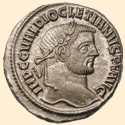
Welcome to Numisology!
Thessalonica

Thessalonica (Diœcesis Mœsiarvm, province of Macedonia)

Coinage from Thessalonica is divided into two groups, at the death of Maximinus II in 313.

  • Coinage, 294–313
  • Coinage, 313–328
  • About Thessalonica...
  • Map
104-862

(click image to see larger picture)

Maximianus augustus
—struck by Galerius
Thessalonica, 298-299
obv.- IMP C MA MAXIMIANVS P F AVG; laur bust r
rev.- GENIO POPVLI ROMANI; Genius standing left, modius on head, naked but for chlamys over left shoulder, holding patera (from which liquor flows) right and cornucopiae left; in ex, TSA
RIC VI Thes 19b
28mm; 9.3g; follis
104-745

(click image to see larger picture)

Galerius caesar
—struck by Galerius
Thessalonica, 298
obv.- GAL VAL MAXIMIANVS NOB CAES; laureate bust right
rev.- GENIO POPVLI ROMANI; Genius standing left, holding patera and cornucopia; TSA in exergue
RIC VI Thes 20b; Fail 006
28mm; 11g; follis
first issue from Thessalonica
204-087

(click image to see larger picture)

Constantius I caesar
—struck by Galerius
Thessalonica, 302-303
obv.- FL VAL CONSTANTIVS NOB CAES; laureate bust right
rev.- GENIO POPVLI ROMANI; Genius standing with patera and cornucopiae; epsilon in rt field; • TS • in ex
RIC VI Thess 26a
28mm; 9.3g; follis


The mint was re-opened in 308 after the Conference of Caruntum, where Galerius arranged for Licinius to be appointed Augustus. The mintmark for these coins contains the SM ("Sacra Monetas") legend, indicating that one of the Augusti was in residence and it was a primary mint. Licinius assumed control of the mint when Galerius dies in 311. The moment of Licinius' takeover is obvious, because it begins striking Licinius' standard "Iovi" reverse type to the exclusion of all others. The mint retained its "SM" status until 312, when Licinius moved his headquarters east to Heraclea in preparation for the looming war with Mximinus II.

204-194

(click image to see larger picture)

Licinius I augustus
—struck by Maximinus II
Thesalonica, 308–311
obv.- VAL LICINIVS P F AVG; Laureate bust of Licinius facing right
rev.- GENIO AVGVSTI; Genius standing left, holding patera and cornucopiae; * in left field; Γ in right field; •SM•TS• in ex
RIC VI Thes 30b
25mm; 6.4g; follis
104-505

(click image to see larger picture)

Maximinus II fil aug
—struck by Galerius
Thessalonica, 308-310
obv.- MAXIMINVS FIL AVGG; laur bust right
rev.- GENIO CAESARIS; Genius stg left holding patera and cornucopia; SM•TS in ex, star-Δ in field
RIC VI Thes 32a; Fail 193
26mm; 6.0g; follis
104-991

(click image to see larger picture)

Galeria Valeria augusta
—struck by Galerius
Thessalonica, 309-310
obv.- GAL VALERIA AVG; Diademed, draped bust right
rev.- VENERI VICTRICI; Venus, stg. facing, head l., r. holding up apple, l. raising drapery over l.shoulder; In fields: *|B; In ex: SMTS
RIC VI Thes 35
24mm; 6.7g; follis
Rated S in RIC
104-523

(click image to see larger picture)

Licinius I augustus
—struck by Galerius
Thessalonica, 308-310
obv.- VAL LICINIVS PF AVG; Laureate head right, divergent laurel ties
rev.- VIRTVTI EXERCITVS; Mars advancing right, nude but for chlamys over left shoulder, helmeted and wearing boots, spear pointing forward in right hand, trophy over left shoulder in left hand * | B across fields . SM . TS . in exergue
RIC VI Thes 37b; Fail 212
27mm; 6.8g; follis
104-985

(click image to see larger picture)

Maximinus II caesar
—struck by Galerius
Thessalonica, 308-310
obv.- GAL VAL MAXIMINVS NOB C; laur bust right
rev.- VIRTVTI EXERCITVS; Mars advancing right, holding transverse spear and trophy. * | Δ in fields. •SM•TS• in ex
RIC VI Thes 38a
25mm; 6.0g; follis
rated as S in RIC
104-986

(click image to see larger picture)

Maximinus II fil aug
—struck by Galerius
Thessalonica, 308-310
obv.- MAXIMINVS FIL AVGG; laur bust right
rev.- VIRTVTI EXERCITVS; Mars advancing right, holding transverse spear and trophy. * | Δ in fields. •SM•TS• in ex
RIC VI Thes 39a
25mm; 6.3g; follis
rated as S in RIC. Coins from Maximinus II with this reverse are common; coins as filius augustorum are reasonably scarce; but coins that combine both this reverse and struck are filius augustorum are scarce indeed.
104-757

(click image to see larger picture)

Galerius commem
—struck by Licinius I
Thessalonica, 311
obv.- DIVO MAXIMIANO; veiled bust right
rev.- MEM DIVI MAXIMIANI; Eagle surmounting domes shrine with closed doors; Γ in field; •SM•TS• in ex
RIC VI Thes 48; Fail 206
25mm; 4.36g; follis
Mint mark "Γ" is unlisted—only A is listed—but is mentioned in footnote as a possibility. The issue itself is rated R5 in RIC ("Small and extremely rare issue") but that seems a bit overdone.
204-060

(click image to see larger picture)

Licinius I augustus
—struck by Licinius I
Thessalonica, 312
obv.- IMP C VAL LIC LICINIVS P F AVG; Laureate head right
rev.- IOVI CONSERVATORI; Jupiter standing facing, head left, naked but for chlamys over left shoulder, globe in right hand, scepter in left Wreath | Γ across fields; •SM•TS• in ex
RIC VI Thes 49; Fail 202a
24mm; 5.9g; follis
104-665

(click image to see larger picture)

Maximinus II augustus
—struck by Licinius I
Thessalonica, 312
obv.- MAXIMINVS PF AVG; laureate bust right
rev.- IOVI CONSERVATORI; Jupiter standing facing, head left, naked but for chlamys over left shoulder, globe in right hand, scepter in left hand. Wreath in left field, A in right; •SM•TS• in ex
RIC VI Thes 50a; Fail 202a
25mm; 5.0g; follis
badly and intentionally scratched in antiquity; most likely a "damnatio" gesture aimed at Maximinus and the Christian persecutions
104-535

(click image to see larger picture)

Constantine I augustus
—struck by Licinius I
Thessalonica, 312
obv.- CONSTANTINVS P F AVG; Laureate head right
rev.- IOVI CONSERVATORI; Jupiter standing facing, head left, naked but for chlamys over left shoulder, globe in right hand, scepter in left hand. Wreath in left field, B in right; SMTS in ex
RIC VI Thes 50b; Fail 202a
24mm; 5.24g; follis
204-150

(click image to see larger picture)

Constantine I augustus
—struck by Licinius I
Thessalonica, 312-313
obv.- IMP C CONSTANTINVS PF AVG; Laureate, draped and cuirassed bust rt
rev.- IOVI CONSERVATORI AVGG NN; Jupiter standing left, holding Victory and a sceptre, eagle at his feet, •TS•E• in ex
RIC VI Thes 61b
23mm; 3.7g; follis
This is a curious obverse legend. The addition of the AVGG NN to the legend would seem to indicate that there were now two Augusti, presumably Licinius and Constantine; yet this type was also struck in the name of Maximinus II, in addition to the other two.

Following the first civil war with Licinius—which ended in the Balkans relatively close to Thessalonica—Constantine most likely stayed in Thessalonica. It was at this point that he began striking a series of coins promoting his descent from several other emperors. The idea most likely was to emphasize that his power is a natural result of his divine descent, rather than from his appointment within the Tetrarchic system. The goal no doubt was to portray his position as superior to Licinius, who had no such descent.

104-559

(click image to see larger picture)

Maximianus commem
—struck by Constantine I
Thessalonica, 317-318
obv.- DIVO MAXIMIANO SEN FORT IMP; Maximianus, laureate and veiled bust right
rev.- REQVIES OPTIM-ORVM MERITORVM; Emperor sitting on curule chair holding sceptre
RIC VII Thes 24; Fail 332
16mm; 1.8g; half-follis
104-675

(click image to see larger picture)

Constantius I commem
—struck by Constantine I
Thessalonica, 317-318
obv.- DIVO CONSTANTIO PIO PRINC; Constantius, laureate and veiled bust right
rev.- REQVIES OPTIMORVM MERITORVM; emperor std left in curule chair; TSE in ex. Supposed to be •TS•E• looks like dots are missing, but maybe they're there very faintly??
RIC VII Thes 25; Fail 332
17mm; 1.8g; half-follis
rated r5 in RIC, S in Failmezgar
104-516

(click image to see larger picture)

Claudius II (Gothicus) commem
—struck by Constantine I
Thessalonica, 317-318
obv.- DIVO CLAVDIO OPTIMO IMP; veiled laureate bust r
rev.- REQVIES OPTIMORVM MERITORVM; Claudius seated l. on curule chair, TS [epsilon] in ex
RIC VII Thes 26; Fail 332; Sear-3232 var;
17mm; 1.6g; half-follis
Rare. In this special issue of fractional coins Constantine I honors his father Constantius I, his father-in-law Maximian Herculius, and, on our coin, also his alleged ancestor Claudius Gothicus
204-231

(click image to see larger picture)

Licinius I augustus
—struck by Constantine I
Thessalonica, 318-319
obv.- IMP LICI NIVS AVG; Laureate cuirassed bust right
rev.- VOT XX MVLT XXX; legend within laurel wreath; •TS•A• in ex
RIC VII Thes 33
19mm; 2.0g; nummus
104-518

(click image to see larger picture)

Licinius I augustus
—struck by Constantine I
Thessalonica, 319
obv.- IMP LICINIVS AVG; laureate cuirassed bust right
rev.- VICTORIA AVGG NN; Victory advancing left holding wreath, .TS.D in ex
RIC VII Thess 61; Fail 287
19mm; 3.0g; AE3
RIC rated R2
204-123

(click image to see larger picture)

Constantine I augustus
—struck by Constantine I
Thessalonica, 319
obv.- CONSTANTINVS AVG; laureate bust right
rev.- VIRT EXERC; Sol stg. in the middle of what RIC describes as a Roman camp; •TS•Γ• in ex.
RIC VII Thes 66
19mm; 2.5g; follis
Holed in antiquity, most likely to be worn around the neck as a pendant by a soldier in one of Constantine's legions. Listed as R5 in RIC
204-196

(click image to see larger picture)

Licinius I augustus
—struck by Constantine I
Thessalonica, 319
obv.- IMP LICINIVS AVG; Laureate and cuirassed bust right
rev.- VIRT EXERC; Sol, raising right hand and holding globe in left, standing slightly left in center of plan of Roman camp; •TS•A• in ex
RIC VII Thes 68
19mm; 2.4g; follis
Rare; rated R3 in RIC. Most of these were struck in the name of Constantine, examples struck in the names of Licinius or the caesars are decidedly more scarce.
204-207

(click image to see larger picture)

Constantine II caesar
—struck by Constantine I
Thessalonica, 324
obv.- CONSTANTINVS IVN NOB C; laureate draped cuirassed bust left
rev.- CAESARVM NOSTRORVM; VOT • V within wreath, TSBVI in exergue
RIC VII Thess 128
19mm; 3.0g; nummus
204-199

(click image to see larger picture)

Constantine I augustus
—struck by Constantine I
Thessalonica, 326-328
obv.- CONSTANTINVS AVG; laureate "heroic"-style bust right
rev.- PROVIDENTIAE AVGG; Camp gate with two turrets and star above; • in right field; SMTSE in ex
RIC VII Thess 154
20mm; 3.6g; follis
Unusual "heroic"-style bust. Evidently Constantine was resident in or around Thessalonica at this time, following his decisive victory over Licinius in their final civil war; its not surprising that a local celator might try to portray Constantine in such a guise at this time.

Thessalonica was one of cluster of mints whose primary purpose was to finance the military activities in the Balkans. Due to its location on the vitally important road to Byzantium and Asia, it was also the traditional Roman administrative center for all of Greece, even though it was well north of Greece proper.

The mint was established in 298 when Galerius established residence in the city following his victories over the Persians. He built a triumphal arch (which still stands) and a great palace, and transferred the Heraclea mint to Thessalonica. The mint struck coins until 303, when Diocletian passed through the city and dedicated the arch as part of the celebrations of his vicennalia (20th anniversary). The mint operated until 308, when it was closed and moved north to Serdica.


Timeline

315 BC — City founded as Θεσσαλονίκη by Cassander, King of Macedon following the death of Alexander, on the site of the ancient village of Therma.

168 BC — Macedon becomes Roman province; Thessalonica becomes Roman capital.

~140 BC — Via Egnatia is constructed through Thessalonica, connecting Byzantium and Adriatic Sea.

51 AD — Paul and Silas enter city during Paul's missionary journeys and establish the Christian community there.

298 — Galerius returns to city after Persian war to take up residence. Builds triumphal arch, palace, and other monuments.

303 — Diocletian visits city and dedicates arch.

306 — St. Demetrios, patron saint of Thessalonica, is martyred in Thessalonica during the Christian persecutions, run through with spears. The first Church of Aghios Demetrios is founded in 313, shortly after the Edict of Milan legalizes Christianity.

311 — Licinius assumes control of city after death of Galerius.

390 — Theodosius massacres 7,000 citizens after a revolt.

479 — Sacked by Goths.

675–681 — Attacked repeatedly by Slavs.

904 — Muslims from Tripoli raid and conquer city.

1423 — Byzantines sell city to the Ventians.

1430 — Captured by Turks. Becomes part of Ottoman empire for next five centuries.

~1500 — Ottomans invite Jews expelled from Spain to settle in Thessalonica. City becomes one of most important Jewish centers in Europe and center of Ladino culture.