![]()
Constantine I
|
||
|
Go to mint...
|
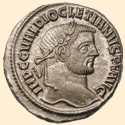
Constantine I (Flavius Valerius Aurelius Constantinus)Coins from Constantine are divided into five sections, reflecting the impressive scope of his career and consequent breadth of his coinage.
204-236
Constantine I caesar
—struck by Constantine I
Treveri, 306
obv.- FL VAL CONSTANTINVS NOB C; laureate, cuirassed bust right
rev.- GENIO POPVLI ROMANI; Genius standing left, head towered, loins draped, holding patera & cornucopiae; S | F in fields; PTR in ex
RIC VI Tr 668c
28mm; 9.1g; nummus
From the very first issue of coins struck for Constantine at Treveri. Constantius died during this issue, so immediately following his death, the first coins were struck in Constantine's name. The vast majority of Constantine's coins struck as caesar are from the next series with the S-A mintmark instead of the earlier S-F series. Rated S in RIC.
104-975
Constantine I caesar
—struck by Constantine I
Treveri, 307
obv.- FL VAL CONSTANTINVS NOB C; laureate, draped, cuirassed bust right, seen from behind
rev.- GENIO POPVLI ROMANI; Genius, towered, loins draped, stg left holding cornucopia and patera; S A in field; PTR in ex
RIC VI Tr 694
28mm; 7.9g; nummus
Rated S in RIC
104-591
Constantine I caesar
—struck by Constantine I
Lugdunum, 307
obv.- FL VAL CONSTANTINUS N C; laureate / draped bust right
rev.- GENIO POPULI ROMANI; Genius holding patera over alter, loins draped; N in field; PLC in ex
RIC VI Lug 214b; Fail 72
27mm; 6.9g; nummus
struck in spring 307. Rated S in RIC
204-031
Constantine I caesar
—struck by Maximinus II
Antioch, 306-307
obv.- FL VAL CONSTANTINVS NOB CAES; laureate bust right
rev.- GENIO POPVLI ROMANI; Genius standing facing, head left, modius on head, naked but for chlamys over left shoulder, liquors flowing from patera in right hand, cornucopiae in left; Z in field; ANT: in ex
RIC VI 75 [var]
26mm; 10.6g; nummus
This group of nummi is recorded for all the members of the second tetrarchy, but not for Constantine as Caesar or Severus II as augustus (see 104-646 for an example of the unrecorded Severus II).
204-149
Constantine I caesar
—struck by Galerius
Serdica, 306-307
obv.- FL VAL CONSTANTINVS NOB CAESAR; Laureate bust right
rev.- GENIO POPVLI ROMANI; Genius standing left, modius on head, naked except for chlamys over left shoulder, holding patera from which liquid flows, & cornucopiae, Γ to right, SMSD in exergue
RIC VI Ser 26
27mm; 7.9g; nummus
Listed as R3 in RIC. The silvering makes it tough to photograph, but this is a wonderful portrait. Even though it is very stylized, the celator clearly tried to capture a younger, youthful Constantine compared to portraits of his father from the same mint and timeframe.
204-032
Constantine I caesar
—struck by Maximinus II
Antioch, 306-307
obv.- FL VAL CONSTANTINVS NOB CAES; laureate bust right
rev.- GENIO POPVLI ROMANI; Genius standing facing, head left, modius on head, naked but for chlamys over left shoulder, liquors flowing from patera in right hand, cornucopiae in left; A in field; ANT: in ex
RIC VI 75 [var]
27mm; 10.5g; nummus
This group of nummi is recorded for all the members of the second tetrarchy, but not for Constantine as Caesar or Severus II as augustus. Despite being technically "uncatalogued" examples have been documented from 10(!) officina; Jan de Veen documents numerous examples here.
204-250
Constantine I caesar
—struck by Galerius
Siscia, 306-307
obv.- FL VAL CONSTANTINVS NOB C; Laureate bust right
rev.- CONCORDIA IMPERII; Concordia standing left, modius on her head, holding a sceptre in left hand, a fold of her robe draped over right arm; VI in field; SISA in ex
RIC VI Sis 173c
27mm; 9.9g; nummus
104-838
Constantine I caesar
—struck by Galerius
Heraclea, 306-307
obv.- FL VAL CONSTANTINVS NOB CAES; laur bust right
rev.- GENIO POPVLI ROMANI; Genius standing left, pouring liquid from patera in right hand, holding cornucopia in left; HT-Γ in exergue
RIC VI Her 31
29mm; 13.3g; nummus
rated S in RIC. Quite overweight; this is arguably the largest, heaviest coin of Constantine you're likely to ever find.
104-517
Constantine I caesar
—struck by Constantine I
Londinium, 307
obv.- FL VAL CONSTANTINVS NOB C;
rev.- GENIO POP ROM; Genius, draped, holding patera and cornucopia
RIC VI Lon 88b; Fail 198
27mm; 6.8g; nummus
RIC rated R
204-021
Constantine I caesar
—struck by Constantine I
Lugdunum, 307
obv.- FL VAL CONSTANTINVS NC; laureate, cuirassed bust right
rev.- GENIO POP ROM; Genius stg left, modius on head, holding patera and cornucopia; N in field, PLC in ex
RIC VI Lug 235
25mm; 5.5g; nummus
listed as R in RIC
104-527
Constantine I caesar
—struck by Maximinus II
Cyzicus, 307
obv.- FL VAL CONSTANTINVS NOB CAES;
rev.- GENIO AVGG ET CAESARVM NN; KA* in ex
RIC VI Cyz 26b; Fail 45
26mm; 9.8g; nummus
204-001
Constantine I caesar
—struck by Severus II
Aquileia, 306-307
obv.- CONSTANTINVS NOB CAES; laur bust r
rev.- VIRTVS AVGG ET CAES NN; Constantine I on horseback riding right, spearing kneeling foe, second foe prostrate on ground, AQ(Γ) in ex
RIC VI Aq 82b; Fail 056
28mm; 9.2g; nummus
rated R in RIC, R in Fail
204-255
Constantine I caesar
—struck by Maxentius
Aquileia, May/June 307
obv.- CONSTANTINVS NOB CAES; Laureate, draped, and cuirassed bust right, seen from behind
rev.- VIRTVS CONSTANTINI CAES; Constantine on horseback galloping right, holding round shield and casting spear at enemy prone before him; to left, second enemy lying dead with spear in body, AQΓ in ex
RIC VI Aq 111, Fail 164
29mm; 12.2g; nummus
listed as S in RIC, but that seems kind of understated. From the White Mountain Collection. Wonderful style, especially on the reverse: well-modeled figure with detailed armor and boots, beautifuly rendered horse, great detail with the flowing cape and tail. Wonderful example of 4th-century coinage. Click here for detail. Interesting to compare this coin to 204-001, the previous coin in this series from Aquileia, which were struck by Severus II in the name of himself, Maximinus II, and Constantine. The emperor-on-horseback motif is the same, and Severus uses a generic legend VIRTVS AVGG ET CAESS for all the rulers. After Maxentius assumed control of the mint, he changed the legend to refer specifically to Constantine ("VIRTVS CONSTANTINI") and dropped Maximinus II, as part of his bid to gain Constantine's support. 104-588
Constantine I caesar
—struck by Maxentius
Aquileia, 307
obv.- CONSTANTINVS NOB CAES; Laureate head right
rev.- CONSERV-VRB SVAE; Roma seated facing, head left, in hexastyle temple, globe in right hand, scepter in left, shield at side, AQG in exergue
RIC VI Aq 117; Fail 127n
26.5mm; 6g; nummus
204-173
Constantine I caesar
—struck by Maxentius
Aquileia, 307
obv.- CONSTANTINVS NOB CAES; laureate bust right
rev.- CONSERV VRB SVAE; Roma seated facing, head left, holding globe with standing Victory in right hand and sceptre in left; within hexastyle temple, wreath in pediment, in exergue, AQG
RIC VI Aq 117 var
26mm; 6.5g; nummus
Unknown variety with Victory standing on globe. There's many, many varieties of Roma seated in temple holding globe—presumably because the coin design is based on a real temple with a real statue—but I've never seen one that has Victory standing on the globe. This variety isn't listed in RIC, but is mentioned in Jeločnik's accounts of the Čentur hoard. In fact, this coin is a die match for that coin, as illustrated on Plate T.III # 60. See detail.
204-146
Constantine I caesar
—struck by Severus II
Carthage, 306
obv.- FL VAL CONSTANTINVS NOB CAES; Laureate bust right
rev.- SALVIS AVGG ET CAESS FEL KART; Carthage standing facing, head left, in long robe, fruits in both hands; H in field, Δ in ex
RIC VI Car 44b
27mm; 10.5g; nummus
listed as R in RIC
204-071
Constantine I caesar
—struck by Maxentius
Carthage, 307
obv.- FL VAL CONSTANTINVS NOB CAES; laureate bust right
rev.- CONSERVATORES AFRICAE SVAE; Africa standing facing, head left, wearing elephant headdress, holding signum and tusk; at feet to left, a lion with a captured bull; SE-F//Δ
RIC VI Car 58; Fail 123
mm; 11.0g; nummus
Listed as S in RIC; RR in Failmezgar; CNG notes "Rare"
104-828
Constantine I caesar
—struck by Maxentius
Carthage, 307
obv.- CONSTANTINVS NOB CAES; laur bust r
rev.- CONSERVATORES KART SVAE; Carthago, wearing long dress and cloak, standing facing within hexastyle temple, head turned l., holding fruits in both her extended hands; PK-Δ in ex
RIC VI Car 61; Fail 124
26mm; 7.34g; nummus
last issue of Carthage (before Domitius Alexander revolt)
104-890
Constantine I caesar
—struck by Constantine I
Treveri, 307
obv.- FL VAL CONSTANTINVS NOB C; laur cuir bust right
rev.- GENIO POP ROM; Genius standing left holding a patera and cornucopiae. PTR in ex; S|A in field
RIC VI Tr 719b
28mm; 7.3g; nummus
This is probably my favorite Constantine the Grest portrait coin. Click here for close-up detail.
104-950
Constantine I caesar
—struck by Constantine
Treveri, 307
obv.- F L VAL CONSTANTINVS NOB C; laur-draped-cuir bust right
rev.- GENIO POP ROM; Genius standing facing, towered head left, loins draped with himation, patera in right hand, cornucopiae in left ; S | A across fields; PTR in exergue
RIC VI Tr 719b
27mm; 6.3g; nummus
204-313
Constantine I caesar
—struck by Severus II
Ticinum, 306
obv.- CONSTANTINVS NOB CAES; Laureate bust right
rev.- VIRTVS AVGG ET CAES NN; Mars advancing right in military dress, holding spear right and trophy over shoulder; • in field, ST in ex
RIC VI Tic 75
26mm; 9.5g; nummus
204-324
Constantine I caesar
—struck by Severus II
Ticinum, 307
obv.- CONSTANTINVS NOB CAES; laureate bust right
rev.- PERPETVA VIRTVS; Mars advancing right, holding spear and round shield; PT in ex
RIC VI Tic 88
25mm; 6.1g; nummus
ex Elliot-Kent Collection
104-685
Constantine I caesar
—struck by Constantine I
Treveri, 307
obv.- FL VAL CONSTANTINVS NOB C; laur dr bust right
rev.- MARTI PATRI PROPVGNATORI; Mars advancing right, holding spear and shield; PTR in ex; S|A in fields
RIC VI Tr 730; Fail 083
27mm; 7.4g; nummus
This might be the most stylish Constantine coin I have.
104-511
Constantine I caesar
—struck by Constantine I
Treveri, 307
obv.- FL VAL CONSTANTINVS NOB C; Laureate and cuirassed bust right
rev.- PRINCIPI IVVENTIS; Constantine standing left, holding standard in each hand; S-A in fields, PTR in ex
RIC VI Tr 734; Fail 207
27mm; 7.1g; nummus
104-771
Constantine I caesar
—struck by Constantine I
Treveri, 307
obv.- FL VAL CONSTANTINVS N C; Laureate cuirassed bust of Constantine right
rev.- MARTI PATRI CONSERV; Mars, naked and helmeted standing r., leaning on reversed spear, resting shield on ground; S|A in fields, PTR in ex
RIC VI Tr 740
22mm; 4.4g; half-nummus
A rare early fractional bronze type of Constantine the Great as Caesar. Rated R3 in RIC
104-486
Constantine I fil aug
—struck by Maximinus II
Nicomedia, 308-309
obv.- FL VAL CONSTANTINVS FIL AVG;
rev.- GENIO CAESARIS CMH (lig); Genius standing left, holding patera and cornucopia; SMNB in exergue
RIC VI Nic 56; Fail 194a
26mm; 6.2g; nummus
ex Clayton collection
204-121
Constantine I caesar
—struck by Maxentius
Rome, 307
obv.- CONSTANTINVS NOB CAES; laureate bust right
rev.- CONSERVATO-RES VRB SVAE; Roma seated facing, head l., in hexastyle temple r. holding globe and sceptre (plain pediment); R * Q in ex
RIC VI Rom 196
25mm; 5.7g; nummus
204-230
Constantine I fil aug
—struck by Galerius
Siscia, 309-310
obv.- CONSTANTINVS FIL AVGG; Laureate head right
rev.- GENIO AVGVSTI; Genius standing left, holding patera and cornucopiae; (crescent) | A in field, SIS in ex
RIC VI Sis 200b
24mm; 7.4g; nummus
rated S in RIC.
204-210
Constantine I fil aug
—struck by Maximinus II
Antioch, 309
obv.- FL VAL CONSTANTINVS FIL AVG; laureate bust right
rev.- GENIO FIL AVGG; Genius standing left, modius on head, holding patera and cornucopiae; o E in right field; ANT• in ex
RIC VI Ant 111
23mm; 7.0g; nummus
This rare reverse legend was only used for a year, only at Antioch, and only for Constantine. Even though Maximinus also, technically, had the same title as Constantine, it is a measure of the distate with which the title was viewed that he only used it for Constantine. (Constantine, for his part, never used the title at all, either for himself or Maximinus.)
204-094
Constantine I fil aug
—struck by Maximinus II
Alexandria, 308-310
obv.- FL VAL CONSTANTINVS FIL AVG; laureate bust right; divergent ties (α)
rev.- GENIO CAESARIS; Genius standing left, modius on head, naked except for chlamys over left shoulder, holding patera and cornucopiae, K in left field, A-P in right field, ALE in ex
RIC VI Ale 99b
24mm; 6.0 g; nummus
Coins with the filius augustorum title are much more common from the mints controlled by Galerius (such as Siscia and Thessalonica), since the title was his idea and he would have been interested in promoting it. Less common from mints controlled by Maximinus, who was anxious to ditch the whole concept ASAP. However, since Galerius was his patron, he had to acknowledge it to some extent, hence the scarce coinage such as this example. Constantine himself, not bound by any such concerns, never struck any coins with this title at any mints under his control, either in his name or Maximinus' name. Listed S in RIC.
204-204
Constantine I augustus
—struck by Constantine I
Treveri, 307-308
obv.- IMP CONSTANTINVS PF AVG; Laureate, cuirassed bust right; seen from front in 3/4 view
rev.- VIRTVS MILITVM; Camp gate with no door; 7 rows of bricks; 4 turrets; TR in ex
RIC VI Tr 758; RSC 707e
16.5mm; 1.5g; half-argenteus
rated R2 in RIC
104-951
Constantine I augustus
—struck by Constantine I
Treveri, 307-308
obv.- IMP CONSTANTINVS PF AVG; laur cuir bust r
rev.- MARTI PATRI PROPVGNATORI; Helmeted Mars, naked but for chlamys, advancing right, holding spear and shield. S-A in fields, PTR in ex
RIC VI Tr 776
26mm; 6.1g; nummus
rated S in RIC
104-976
Constantine I augustus
—struck by Constantine I
Treveri, 307-308
obv.- IMP CONSTANTINVS P F AVG; laureate and cuirassed bust of Constantine right
rev.- PRINCIPI IVVENTVTIS; Prince standing facing, head left, in military attire, holding standard in each hand, S—A in fields, PTR in exergue
RIC VI Tr 781
27mm; 6.3g; nummus
This is one of the better Constantine portraits in my collection. Click here to see close-up detail.
104-775
Constantine I augustus
—struck by Constantine I
Treveri, 307-308
obv.- IMP CONSTANTINVS PF AVG; laur cuir bust right
rev.- MARTI PATRI CONSERVATORI; Mars, helmeted, stg r, leaning on reversed spear, shield resting on ground; S|A in field; PTR in ex
RIC VI Treveri 772a; Fail 080
27mm; 7.9g; nummus
104-954
Constantine I augustus
—struck by Maxentius
Rome, 307
obv.- CONSTANTINVS PF AVG; laur bust right
rev.- CONSERVATORES VRB SVAE; Roma seated facing, head left, in hexastyle temple, globe in right hand, scepter in left, wreath in pediment, knobs as acroteria
R*Q in exergue
RIC VI Rom 201
27mm; 6.1g; nummus
rated S in RIC
204-107
Constantine I augustus
—struck by Maxentius
Ticinum, 308
obv.- CONSTANTINVS PF AVG; laur bust right
rev.- CONSERV VRB SVAE; Roma seated facing, head left, in hexastyle temple, right hand holding globe, left hand holding a scepter;
PT in ex
RIC VI Tic 93
27mm; 6.8g; nummus
204-073
Constantine I augustus
—struck by Constantine I
Ticinum, 307-308
obv.- CONSTANTINVS PF AVG; laureate bust right
rev.- VIRTVS PERPETVA AVG; Hercules strangling the Nemean Lion; club to lower right; ST
RIC VI Tic 99; Fail 166
25mm; 6.13g; nummus
Listed as R in RIC, RR by Failmezgar
204-162
Constantine I augustus
—struck by Constantine I
Lugdunum, 307-308
obv.- IMP C CONSTANTINVS P F AVG; laureate draped bust right, seen from rear
rev.- CONSTANTINO P AVG B R P NAT; Constantine stg facing, head l., in military dress, r. holding globe, l. leaning on sceptre; PLC in ex
RIC VI Lug 252
28mm; 5.9g; nummus
Rated R in RIC. The reverse legend CONSTANTINO P AVG B(ono) R(ei) P(ublicae) NAT(o), means "To Constantine, prince, Emperor, born for the welfare of the state." This likely commemorates Constantine's birthday on 27 February 308. Constantine would have 27 or 28 for this birthday.
204-316
Constantine I augustus
—struck by Constantine I
Lugdunum, 307-308
obv.- IMP C CONSTANTINVS PF AVG; laureate draped bust right
rev.- MARTI PATRI CONSERVATORI; Mars standing right, holding spear pointing down and leaning on shield; PLC in ex
RIC VI Lug 260 [var]
27mm; 7.6g; nummus
This reverse type is completely uncatalogued for this issue, although it ought to be expected since it is present in both the "N" and CI-HS issues that bracket this PLC issue in RIC. In both of those other issues, it is present as part of a set with the other Mars reverse types that are also present in this issue.
204-314
Constantine I augustus
—struck by Constantine I
Lugdunum, 307-308
obv.- IMP C CONSTANTINVS PF AVG; laureate cuirassed bust right
rev.- MARTI PATR SEMP VICTORI; Mars standing right, head left, holding transverse spear and trophy over shoulder; PLC in ex
RIC VI Lug 263 [var]
25mm; 6.3g; nummus
For Constantine, this is only catalogued for laureate/cuirassed bust, seen from rear; not listed for an ordinary cuirassed bust, seen from front. Catalogued by Bastien as note to Lyon 502 -- this specific coin, cited and illustrated. Extremely rare, and the only example cited in Lyon.
204-161
Constantine I augustus
—struck by Constantine I
Lugdunum, 307-308
obv.- IMP C CONSTANTINVS P F AVG; laureate draped bust right, seen from rear
rev.- SECVRIT PERPET DD NN; Securitas stg. l., leaning l., with transverse sceptre on column, r. raised to head; PLC in ex
RIC VI Lug 278
27mm; 6.3g; nummus
Rated S in RIC, but I suspect it's a bit rarer than that…
104-761
Constantine I augustus
—struck by Constantine I
Lugdunum, 308
obv.- IMP C CONSTANTINVS PF AVG; laureate draped bust right
rev.- GENIO POP ROM; Genius holding patera over altar; CI - HS in fields, PLC in ex
RIC VI Lug 287; Fail 073
27mm; 6.2g; 308-309
A historical bronze dating to marraige of Constantine to Fausta. The CI in the left field stands for Constantine Imperator and declares his new title along with his new father in law. The horizontal HS stands for Heraclius Senior giving honor to his new father in law. The coin is a clear commemoration of Constantines new position in the tetrarchy and his new wife and her family. Rated S in RIC
After about 310, Sol increasingly dominates the coinage from Constantine's western mints. Mars and Genius types were also relatively common, but not as prevalent as Sol.
204-120
Constantine I augustus
—struck by Constantine I
Lugdunum, 309-310
obv.- IMP CONSTANTINVS P F AVG; Laureate bust right, cuirassed, draped, seen from rear
rev.- SOLI INVIC-TO COMITI; Sol radiate, stg. l., chlamys draped over l. shoulder, r. raised, l. holding up globe. F-T in fields, PLC in ex
RIC VI Lug 310
24mm; 4.2g; nummus
I love the figure of Sol on the reverse; click here for extra close-up view.
104-514
Constantine I augustus
—struck by Constantine I
Londinium, 310
obv.- IMPCONSTANTINVS PF AVG; Laur Cuir Right
rev.- SOLI INVICTO COMITI; Sol radiate standing left, holding globe in left hand, raised right hand; PLN in ex; T F in fields
RIC VI Lon 121a; Fail 208
24mm; 5.1g; nummus
104-925
Constantine I augustus
—struck by Constantine I
Londinium, 310-312
obv.- IMP CONSTANTINVS P AVG; laur cuir bust right
rev.- ADVENTVS AVG; Constantine riding left, on horseback pawing captive, holding spear; * in field, PLN in ex
RIC VI Lon 137 [var]
23mm; 3.9g; nummus
In rough condition, but a scarce variety. Picked up from the ebay juk bin. Unlisted for this obverse legend and reverse type; should be catalogued with 133-137.
104-870
Constantine I augustus
—struck by Constantine I
Londinium, 310-312
obv.- CONSTANTINVS PF AVG; Laur.,draped and cuirassed bust right
rev.- COMITI AVGG NN; Sol standing left, holding globe and whip. * in field, PLN in ex
RIC VI Lon 153; Fail 186
24mm; 4.2g; nummus
104-948
Constantine I augustus
—struck by Constantine I
Londinium, 310-312
obv.- CONSTANTINVS PF AVG; laur cuir bust right
rev.- COMITI AVGG NN; Sol standing left, holding globe and whip, * in right field, PLN in exergue
RIC VI Lon 153
23mm; 4.4g; nummus
104-726
Constantine I augustus
—struck by Constantine I
Londinium, 310-312
obv.- CONSTANTINVS PF AVG; Cuir with spear over right shoulder, shield on left arm, bust facing left
rev.- COMITI AVGG NN; Sol radiate standing left, holding globe and whip
RIC VI Lon 163; Fail 186
23mm; 3.7g; nummus
204-183
Constantine I augustus
—struck by Constantine I
London, 310-312
obv.- CONSTANTINVS PF AVG; Laureate cuirassed bust right
rev.- CONCORDIA MILIT; Concordia stg. l. holding two standards; * in field; PLN in ex
RIC VI Lon 195
24mm; 4.2g; nummus
104-945
Constantine I augustus
—struck by Constantine I
Londinium, 310-312
obv.- CONSTANTINVS PF AVG; laureate, helmeted, cuirassed bust left; spear over right shoulder; shield on left arm
rev.- PRINCIPI IVVENTITVS; Prince stg facing, head left, in military dress, holding standard in each hand; * in field, PLN in ex
RIC VI Lon 217
23mm; 4.4g; nummus
Listed as R in RIC
204-062
Constantine I augustus
—struck by Constantine I
Londinium, 310-312
obv.- CONSTANTINVS PF AVG; laur cuirassed bust right
rev.- PRINCIPI IVVENTVTVTIS; Prince standing right, in military dress, holding spear and globe, star on right, PLN in ex
RIC VI Lon 222
23mm; 4.5g; nummus
104-753
Constantine I augustus
—struck by Constantine I
Londinium, 310-312
obv.- CONSTANTINVS PF AVG; laur cuir bust right
rev.- SPES REIPVBL; Emperor on horse prancing left, captive on ground
RIC VI Lon 241; Fail 209
22mm; 4.35g; nummus
rated R in RIC
104-842
Constantine I augustus
—struck by Constantine I
Treveri, 310-313
obv.- IMP CONSTANTINVS AVG; laur cuir dr bust right
rev.- MARTI CONSERVATORI; Helmeted Mars, leaning on reversed spear and shield; T|F in fields, PTR in ex
RIC VI Tr 860; Fail 204
23mm; 4.5g; nummus
Rated S in RIC
104-952
Constantine I augustus
—struck by Constantine I
Treveri, 310-313
obv.- CONSTANTINVS P F AVG; Laureate, cuirassed bust right
rev.- MARTI CONSERVATORI; Mars, helmeted, in military dress, standing facing, head right, reversed spear in right hand, left hand resting on shield ; T | F across fields; PTR in ex
RIC VI Tr 862
24mm; 4.7g; nummus
104-438
Constantine I augustus
—struck by Constantine I
Treveri, 310-313
obv.- IMP CONSTANTINVS AVG;
rev.- SOLI INVICTO COMITI; Sol standing left holding globe, PTR in ex, T F in fields
RIC VI Tr 870; Fail 208
23mm; 4.5g; nummus
104-875
Constantine I augustus
—struck by Constantine I
Treveri, 310-313
obv.- CONSTANTINVS PF AVG; laur cuir bust right
rev.- MARTI CONSERVATORI; cuirassed bust of young Mars right, wearing ornate pseudo-Corinthian helmet
RIC VI Tr 884; Fail 204a
25mm; 5.0g; nummus
104-526
Constantine I augustus
—struck by Constantine I
Treveri, 310-313
obv.- IMP CONSTANTINUS P AUG;
rev.- SOLI INVICTO COMITI; bust of Sol right
RIC VI Tr 889; Fail 208a, Sear 3867
21mm; 4.8g; nummus
104-817
Constantine I augustus
—struck by Constantine I
Treveri, 310-315
obv.- IMP CONSTANTINVS AVG;
rev.- MARTI CONSERVATORI; T|F in field; PTR in ex
RIC VI 859; Fail 204
22mm; g; nummus
also RIC VII Tr 50
The eastern emperors also struck coins recognizing Constantine as augustus in this period. While Galerius tended to stick with more traditional types, Maximinus II (like Constantine) was developing a different catalog of types. 204-156
Constantine I augustus
—struck by Maximinus II
Alexandria, 308-310
obv.- FL VAL CONSTANTINVS AVG; Laureate bust right
rev.- GENIO IMPERATORIS; K-Δ-P in fields, ALE in ex
RIC VI Ale 108
26.5mm; 6.0g; nummus
204-154
Constantine I augustus
—struck by Maximinus II
Cyzicus, 311
obv.- IMP C FL VAL CONSTANTINVS P F AVG; laureate bust right
rev.- GENIO AVGVSTI CMH; Genius standing left, holding patera and cornucopia; MKV in ex
RIC VI Cyz 77b
23mm; 7.9g; nummus
This is another deeply struck coin from fresh dies. This is a wonderfully satisfying coin to hold in hand: thick and heavy, perfectly centered, with a smooth, glossy patina. A photograph doesn't really get it done.
104-907
Constantine I augustus
—struck by Maximinus II
Nicomedia, 311
obv.- IMP C FL VAL CONSTANTINVS PF AVG; laureate / draped bust right
rev.- GENIO AVGVSTI CMH; Genius standing left, holding patera and cornucopia; S in field, SMN in ex
RIC VI Nic 66d [var]
21mm; 3.3g; nummus
The GENIO AVGVSTI follii from Group V (310-311 AD, of which RIC 66 is a part) have -CMH ligature in reverse legend, with the officina mark in ex instead of in the field. The Group VI GENIO AVGVSTI follii have officina mark in field, no ligature in the reverse legend, and altar / eagle in other field. So this is a complete hybrid: the Group V reverse design & ligature, but struck with the Group VI mint marks.
104-656
Constantine I augustus
—struck by Maximinus II
Nicomedia, 311
obv.- IMP C FL VAL CONSTANTINVS PF AVG; laureate / draped bust right
rev.- VIRTVTI EXERCITVS; Mars advancing right, holding spear, shield, and trophy; B in field; SMN in ex
RIC VI Nic 70c [sic]; Fail 212
22mm; 4.5g; nummus
This type only listed for Licinius (70a) and Maximinus (70b), not Constantine, which would be expected at 70c.
204-108
Constantine I augustus
—struck by Maximinus II
Nicomedia, 312
obv.- IMP C FL VAL CONSTANTINVS P F AVG; laur bust right
rev.- HERCVLI VICTORI; Hercules standing right, resting hand on hip and holding club with lion skin; * Δ in field; SMN in ex
RIC VI Nic [75c]; Fail 201
21mm; 4.9g; nummus
Unlisted in RIC for Constantine (or Licinius, for that matter), matches RIC 75 for Maximinus; if it were cataloged, it would be RIC 75c. Tough to get a good picture of this coin because where the silvering has worn off, the metal is patinated pure black, but it is actually quite nice with a terrific portrait and a wonderfully detailed Hercules. 204-022
Constantine I augustus
—struck by Licinius I
Siscia, 311
obv.- IMP CONSTANTINVS P F AVG; laureate bust right
rev.- GENIO AVGVSTI; Genius stg left, modius on head, holding patera and cornucopia; crescent-Γ in fields, SIS in ex
RIC VI Sis 209
25mm; 7.3g; nummus
104-801
Constantine I augustus
—struck by Maximinus II
Antioch, 312
obv.- IMP C FL VAL CONSTANTINVS PF AVG; laur bust right
rev.- SOLI INVICTO; Sol, radiate, in long robe, r hand raised, left hand holding head of Serapis; epsilon-I in left field, * in right; ANT in ex
RIC VI Ant 167c; Fail 208d
21mm; 4.2g; nummus
listed S in RIC
204-027
Constantine I augustus
—struck by Maximinus II
Alexandria, 312
obv.- FL VALER CONSTANTINVS PF AVG; laureate bust right
rev.- GENIO AVGVSTI; Genius standing left, holding head of Serapis and cornucopiae; N-A in fields, ALE•t in ex
RIC VI Ale 158 [var]
21mm; 4.9g; nummus
Legends match RIC 158 (listed as R in RIC), but officina A is not recorded. RIC notes that "Off. and B are not evidenced" at all for these entire groups of nummi. The dot following the mint mark is also not recorded for this group, but it is noted for other groups.
204-184
Constantine I augustus
—struck by Maximinus II
Alexandria, 312-313
obv.- FL VALER CONSTANTINVS PF AVG; laureate bust right
rev.- GENIO AVGVSTI; Genius standing left holding head of Serapis and cornucopiae, modius on head, */N/palm branch in field, A in right field, ALE in ex
RIC VI Ale 161
21mm; 5.3g; nummus
Rated S in RIC
204-145
Constantine I augustus
—struck by Constantine I
Aquileia, 312-313
obv.- CONSTANTINVS PF AVG; Laureate, cuirassed bust right
rev.- SOL INVICTO COMITI; Sol standing left, raising hand and holding globe; seated captive to left
RIC VI Aq 144
22mm; 3.8g; nummus
This was struck shortly after Constantine assumed control of the mint in his war with Maxentius. At this time, Sol was recognized on Constantine's coins as his patron deity; the addition of the captive at Sol's feet would have been an unmistakeable allusion to his victory over Maxentius and the new political order in Aquileia.
204-038
Constantine I augustus
—struck by Constantine I
London, 312-313
obv.- CONSTANTINVS PF AVG; laur cuirassed bust right
rev.- FELICITAS AVGG NN; Roma seated left, holding branch and globe, * on left, PLN in ex
RIC VI Lon 246
23mm; 4.0g; nummus
listed as R in RIC. Ex. Dr. J. S. Vogelaar Collection
204-063
Constantine I augustus
—struck by Constantine I
Londinium, 312-313
obv.- CONSTANTINVS PF AVG; laur cuirassed bust right
rev.- MARTI CONSERVATORI; Mars standing right, holding long spear & shield, star in left field, PLN in exergue
RIC VI Lon 254
21mm; 4.9g; nummus
104-768
Constantine I augustus
—struck by Constantine I
Londinium, 312-313
obv.- CONSTANTINVS PF AVG; Laur cuir bust right
rev.- PRINCIPI IVVENTVTIS; Prince standing right in military dress, holding transverse spear and holding globe; * in field; PLN in ex
RIC VI Lon 265; Fail 207c
24mm; 4.1g; nummus
204-034
Constantine I augustus
—struck by Constantine I
Londinium, 312-313
obv.- CONSTANTINVS PF AVG; laur cuirassed bust right
rev.- ROMAE AETER AVGG; Roma seated left, holding branch and globe, star on left, PLN in ex
RIC VI Lon 269
22mm; 4.3g; nummus
listed as R in RIC. Ex. Dr. J. S. Vogelaar Collection
204-035
Constantine I augustus
—struck by Constantine I
Londinium, 312-313
obv.- CONSTANTINVS PF AVG; laur cuirassed bust right
rev.- SECVRITAS AVGG; Securitas standing facing, head left, right hand on head, legs crossed, leaning on column, star on left, PLN in ex
RIC VI Lon 277
23mm; 3.5g; nummus
listed as R in RIC. Ex. Dr. J. S. Vogelaar Collection
104-946
Constantine I nummus. $30—
—struck by Constantine I
Londinium, 312-313
obv.- IMP CONSTANTINVS P F AVG; laureate draped cuir bust right
rev.- SOLI INVICTO COMITI; Sol standing left, head radiate, chlamys over left shoulder, raising right hand, globe in left, PLN in exergue, * in field left
RIC VI Lon 280
23mm; 2.8g; nummus
Rich old collection patina. Ex-Stack's (July 2007 Coin Galleries Sale, lot 163)
104-965
Constantine I augustus
—struck by Constantine I
Rome, 312-313
obv.- IMP CONSTANTINVS PF AVG; laureate cuirassed bust right
rev.- GENIO POPVLI ROMANI; Genius stg left, holding patera and cornucopia; RS in ex
RIC VI Rom 294a
23mm; 4.6g; nummus
One of the first things Constantine did when he captured Rome from Maxentius was issue his own coins, especially the GENIO standard. I like the cartoon-like depiction of Genius on this coin, I wish the face was better struck.
204-117
Constantine I augustus
—struck by Constantine I
Rome, 312-313
obv.- FL VAL CONSTANTINVS AVG; laureate and draped bust, seen from rear
rev.- PACI PERPET; Pax stg. facing, head l., r. holding branch, l. standard
in left field- XII in exergue- RT
RIC VI Rom 355
17mm; 2.3g; half-nummus
104-955
Constantine I augustus
—struck by Constantine I
Rome, 312-313
obv.- IMP CONSTANTINVS PF AVG; Laureate, draped and cuirassed bust r.
rev.- SPQR OPTIMO PRINCIPI; Legionary eagle between two Vexilla, the left surmounted by a hand and the right wreath; RP in ex
RIC VI Rom 350a
23mm; 4.7g; nummus
204-143
Constantine I augustus
—struck by Constantine I
Ostia, 312-313
obv.- IMP C CONSTANTINVS P F AVG; Laureate cuirassed bust right
rev.- SPQR OPTIMO PRINCIPI; legionary eagle between two vexilla, the left surmounted by a hand, the right by a wreath, MOSTP in exergue
RIC VI Ost 94
22mm; 4.4g; nummus
204-142
Constantine I augustus
—struck by Constantine I
Rome, 313
obv.- IMP CONSTANTINVS PF AVG; Laureate draped cuirassed bust right
rev.- MARTI CONSERVATORI; Mars standing right, right arm resting on inverted spear, left on shield, R/F in fields; RP in ex
RIC VII Rom 6
21mm; 3.1g; nummus
Listed R3 in RIC
104-994
Constantine I augustus
—struck by Constantine I
Rome, 317-318
obv.- IMP CONSTANTINVS P F AVG; laureate draped cuirassed bust right
rev.- SOLI INVICTO COMITI; Sol standing left, head radiate, chlamys over left shoulder, raising right hand, globe in left, RT in exergue, wreath in field
RIC VII Rom 97
22mm; 3.8g; nummus
204-280
Constantine I augustus
—struck by Constantine I
Ticinum, 312-313
obv.- CONSTANTINVS PF AVG; Laureate cuirassed bust right
rev.- GENIO POPVLI ROMANI; Genius standing l, holding patera and cornucopiae; TT in ex
RIC VI Tic 117
mm; g; nummus
Rated S in RIC
104-958
Constantine I augustus
—struck by Constantine I
Ticinum, 312-313
obv.- CONSTANTINVS PF AVG; laur cuir bust right
rev.- MARTI CONSERVATORI; Mars right holding spear and shield; ST in ex
RIC VI Tic 124a
23mm; 4.8g; nummus
Rated S in RIC
204-215
Constantine I augustus
—struck by Constantine I
Ticinum, 312-313
obv.- CONSTANTINVS PF AVG; laureate, cuirassed bust right
rev.- MARTI CONSERVATORI; Facing Mars holding spear and shield; PT in ex
RIC VI Tic 124a
23mm; 4.7g; nummus
Rated S in RIC. Much scarcer with a facing figure of Mars, most examples have Mars facing right, although the facing variety is noted in RIC.
104-803
Constantine I augustus
—struck by Constantine I
Ticinum, 312-313
obv.- CONSTANTINVS PF AVG; laur cuir bust right
rev.- SOLI INVICTO COMITI; Sol stg left, r hand raised, l holding globe; PT in ex
RIC VI Tic 128; RIC VII Tic 3; Fail 208
21mm; 3.9g; nummus
Rated S
While Constantine was absorbing the territory conquered from Maxentius, Licinius rapidly took control over the eastern half of the empire. First, Licinius took over Galerius' European territory (and mints) in 311 when Galerius died. Then, in 313, he defeated Maximinus II and took over the rest of the eastern empire. While Constantine's coinage featured Sol and Mars, Licinius' bronze coinage featured Jupiter almost exclusively, whether struck in his name or Constantine's. 104-659
Constantine I augustus
—struck by Maximinus II
Cyzicus, 311
obv.- FL VAL CONSTANTINVS PF AVG; laureate bust right
rev.- IOVI CONSERVATORI AVGG; Jupiter stg legt, holding globe and sceptre; eagle holding wreath at feet; MKV-Γ in ex
RIC VI Cyz 80; Fail 202c
24mm; 6.5g; nummus
Unusually heavy for a "Iovi Conservatori" nummus. This was struck just before the size of the nummus was sharply reduced throughout all of the eastern mints; at 6.5 grams, this is about as heavy a Jupiter nummus as you're likely to see, the overwhelming majority of them are ~3 grams or less.
104-959
Constantine I augustus
—struck by Constantine I
Heraclea, 312
obv.- IMP C FL VAL CONSTANTINVS PF INV AVG; laur bust right
rev.- IOVI CONSERVATORI AVGG; Jupiter standing facing, head left, chlamys hanging from left shoulder, holding Victory on globe, and leaning on sceptre; wreath - Δ in field; SMHT in ex
RIC VI Her 72
24mm; 4.5g; nummus
Listed as S in RIC
104-535
Constantine I augustus
—struck by Licinius I
Thessalonica, 312
obv.- CONSTANTINVS P F AVG; Laureate head right
rev.- IOVI CONSERVATORI; Jupiter standing facing, head left, naked but for chlamys over left shoulder, globe in right hand, scepter in left hand. Wreath in left field, B in right; SMTS in ex
RIC VI Thes 50b; Fail 202a
24mm; 5.24g; nummus
204-150
Constantine I augustus
—struck by Licinius I
Thessalonica, 312-313
obv.- IMP C CONSTANTINVS PF AVG; Laureate, draped and cuirassed bust rt
rev.- IOVI CONSERVATORI AVGG NN; Jupiter standing left, holding Victory and a sceptre, eagle at his feet, •TS•E• in ex
RIC VI Thes 61b
23mm; 3.7g; nummus
This is a curious obverse legend. The addition of the AVGG NN to the legend would seem to indicate that there were now two Augusti, presumably Licinius and Constantine; yet this type was also struck in the name of Maximinus II, in addition to the other two.
204-147
Constantine I augustus
—struck by Licinius I
Siscia, 313-315
obv.- IMP CONSTANTINVS PF AVG; Laureate bust left
rev.- IOVI CONSERVATORI; Jupiter standing left, holding Victory on globe and sceptre; eagle at feet; SIS in ex
RIC VII Sis 5
21mm; 3.1g; nummus
Detailed figure of Jupiter.
204-185
Constantine I augustus
—struck by Licinius I
Alexandria, 313-314
obv.- FL VALER CONSTANTINVS PF AVG; laureate bust right
rev.- GENIO POPVLI ROMANI; Genius standing left holding head of Serapis and cornucopiae, modius on head, N/palm branch in field, Γ-wreath in right field, ALE in ex
RIC VII Ale 2
21mm; 5.3g; nummus
Rated R4-R5 in RIC. This coin was struck shortly after Licinius defeated Maximinus in 313. Upon the defeat of Maximinus, all of the mints formerly under the control of Maximinus began striking "Iovi Conservatori" types like Licinius' other mints and ceased production of Maximinus types. For some reason, the Alexandria mint didn't follow this pattern and continued striking the "Genius holding head of Serapis" type from Maximinus. Exceptionally, the mint also reverted to the old "Genio Populi Romani" legend, in place of the "Genio Augusti" legend that had been used with this reverse type under Maximinus. Perhaps this was an attempt to project a message of tradition and continuity during this period of political change?
204-065
Constantine I augustus
—struck by Licinius I
Alexandria, 315
obv.- IMP C FL VAL CONSTANTINVS P F AVG; Laureate head right
rev.- IOVI CONSERVATORI AVGG; Jupiter standing facing, head left, naked but for chlamys over left shoulder, Victory on globe in right hand, scepter in left. Eagle holding wreath in left field; wreath-Z-N in right field, ALE in ex
RIC VII Ale 7
20mm; 3.0g; nummus
204-153
Constantine I augustus
—struck by Licinius I
Nicomedia, 317-320
obv.- IMP CONSTANTINVS AVG; Laureate, draped bust left, holding mappa in left hand, globe and sceptre in right
rev.- IOVI CONSERVATORI AVGG; Jupiter standing left, chlamys across left shoulder, holding Victory on globe and leaning on eagle-tipped sceptre, palm to left, Z to right, SMN in ex.
RIC VII Nic 23
20mm; 3.3g; nummus
Around 319 Constantine reformed his coinage again and introduced a new reverse design, one with two winged Victories flanking an altar. The reverse inscription VICTORIA LAETAE PRINC PERP translates as "Joyous victory to the eternal prince." In a move indicative of how Constantine was consolidating, centralizing, and systematizing his control of the empire and its bureaucracy, this design was the only bronze coin type struck throughout his domain, at every mint. The other reason this type is significant is because it marks the beginning of the end of pagan coinage, and so is a significant milestone on the road to the empire's impending conversion to Christianity. With a few minor exceptions, the Mars and Sol coins of the previous period were the last pagan deities to appear on Roman coins. The mints under Licinius' control continued to strike Licinius' Jupiter motif for few more years, but only until they came under Constantine's control. 204-283
Constantine I augustus
—struck by Constantine I
Treveri, 318-319
obv.- IMP CONSTANTINVS AVG; cuirassed bust left with high-crested helmet; spear over left shoulder
rev.- VICTORIAE LAETAE PRINC PERP; Two Victories placing shield inscribed VOT PR on altar; PTR in ex
RIC VII Tr 208a
17mm; 2.84g; nummus
204-109
Constantine I augustus
—struck by Constantine I
Ticinum, 318-319
obv.- IMP CONSTANTINVS PF AVG; Helmeted, laureate cuirassed bust right
rev.- VICTORIAE LAETAE PRINC PERP; Two Victories placing Shield inscribed VOT/PR on altar with cross. TT in ex
RIC VII Tic 86
19mm; 3.8g; nummus
204-066
Constantine I augustus
—struck by Constantine I
Siscia, 319
obv.- CONSTANTINVS AVG; Helmeted, cuirassed bust left with shield and spear
rev.- VICT LAETAE PRINC PERP; Two Victories placing Shield inscribed VOT/PR on altar. •ASIS• in ex
RIC VII Sis 84
19mm; 3.8g; nummus
The exception to the above pattern is Thessalonica, where Constantine most likely resided after his victory over Licinius in 317. The coin shown here is a singular type, struck only at Thessalonica for a single issue, showing Sol as the patron deity of the army. This is probably the last time Sol appeared on a Roman coin. 204-123
Constantine I augustus
—struck by Constantine I
Thessalonica, 319
obv.- CONSTANTINVS AVG; laureate bust right
rev.- VIRT EXERC; Sol stg. in the middle of what RIC describes as a Roman camp; •TS•Γ• in ex.
RIC VII Thes 66
19mm; 2.5g; nummus
Holed in antiquity, most likely to be worn around the neck as a pendant by a soldier in one of Constantine's legions. Listed as R5 in RIC
Around this time Constantine also issued a series of small fractional bronzes designed to honor his deceased and deified forebears, and thereby emphasize his own divine descent—his father, Constantius; his father-in-law, Maximianus; and, interestingly, the 3rd-century emperor Claudius II Gothicus, from whom Constantine also claimed descent, even though there is no real evidence to support this. Claudius II was renowned for a tremendous victory over the Goths (hence his title), a victory which took place close to Constantine's birthplace and near the time of his birth. Presumably this event was still remembered and Constantine wanted to capture some of the glow. 204-082
Constantius I commem
—struck by Constantine I
Siscia, 317-318
obv.- DIVO CONSTANTIO PIO PRINCIPI; Laureate veiled bust right
rev.- REQVIES OPTIMORVM MERITORVM; Emperor seated left on curule chair, raising right hand, holding sceptre; SIS in ex
RIC VII Sis 42
16mm; 1.5g; half-nummus
104-516
Claudius II (Gothicus) commem
—struck by Constantine I
Thessalonica, 317-318
obv.- DIVO CLAVDIO OPTIMO IMP; veiled laureate bust r
rev.- REQVIES OPTIMORVM MERITORVM; Claudius seated l. on curule chair, TS [epsilon] in ex
RIC VII Thes 26; Fail 332; Sear-3232 var;
17mm; 1.6g; half-nummus
Rare. In this special issue of fractional coins Constantine I honors his father Constantius I, his father-in-law Maximian Herculius, and, on our coin, also his alleged ancestor Claudius Gothicus
104-533
Constantius I commem
—struck by Constantine I
Rome, 317-318
obv.- DIVO CONSTANTIO PIO PRINC; Constantius, laureate and veiled bust right
rev.- MEMORIAE ATERNAE; eagle standing right, looking left; RP in ex
RIC VII Rom 111; Fail 333
17mm; 1.8g; half-nummus
Struck by Constantine to commemorate his deceased and now-deified father. Part of a series that also honored his purported ancestor, Claudius II Gothicus, and his father-in-law, Maximianus, to emphasize to the populace Constantine's illustrious ancestry. 204-095
Maximianus commem
—struck by Constantine I
Rome, 317-318
obv.- DIVO MAXIMIANO SEN FORT IMP; Maximianus, laureate and veiled bust right
rev.- REQVIES OPTIM-ORVM MERITORVM; Emperor sitting on curule chair holding sceptre
RIC VII Rom 104; Fail 332
21mm; 3.0 g; nummus
much larger flan than expected for this issue; should be about 18mm. See http://www.oudgeld.com/webbib/conscomm.htm for more info about this coin (article by Gert Boersema, originally from Celator).
Around 320–321 Constantine again introduced a new set of reverse types for all the mints. Both types were based on more or less traditional motifs that had often been used previously on Roman coins.
Votive coins were supposed to commemorate the anniversary of an emperor's reign (5 years, 10 years, 20 years, etc.) and also convey the emperor's promise to serve faithfully for another 5–10–20 years, or whatever. Both designs were struck for both emperors and all the caesars, but again there was considerable variation in bust type and the specific votive formula, depending on which augustus/caesar was the subject and when the coin was struck. For example, Constantine in 321 often expressed VOT XX, commemorating 15 years in power and expressing vows for another 5. On these coins, for the first time Constantine is styled MAX AVG. Licinius' objections, if any, are not recorded. 204-139
Constantine I augustus
—struck by Constantine I
Lugdunum, 321
obv.- CONSTANTINVS AVG; Laureate cuirassed bust right
rev.- VIRTVS EXERCIT; Vexillum with banner inscribed VOT / XX between two captives seated on ground
C | R across fields; PLG in ex
RIC VII Lug 115
20mm; 3.9g; nummus
204-219
Constantine I augustus
—struck by Constantine I
Rome, 321
obv.- CONSTANTINVS AVG; Laureate bust right
rev.- D N CONSTANTINI MAX AVG; Legend surrounding laurel wreath, enclosing VOT / • / XX RQ in ex
RIC VII Rom 237
19mm; 3.03g; nummus
In 321 the VIRTVS EXERCIT types were retired in favor of a new reverse motif, this time with the legend BEATA TRANQVILLITAS, celebrating the "Blessed peace" that seemed to exist in 321, with the final war with Licinius still several years away. These were only struck at Londinium, Lugdunum, and Treveri, so perhaps they refer specifically to the peaceful state of the Rhine/German frontier. A globe rests on an altar which typically has a votive inscription, expressing the responsibility of the emperor for the world's security; above, three stars watch over the globe, probably representing Constantine and his two sons who were caesars at this time. During this period, the other mints continued striking regular votive coins. Despite their limited scope, these types were issued with a remarkably large variety of bust types and reverse details. Dieter Alten and Carl-Friedrich Zschucke catalog almost 100 bust types from Treveri alone in their exhaustive “Die Römische münzserie Beata Tranquillitas in der prägestätte Trier 321–323” [2004], and similar variety was produced from the other mints. 204-110
Constantine I augustus
—struck by Constantine I
London, 323-324
obv.- CONSTANTINVS AG; Helmeted, cuirassed bust left
rev.- BEAT TRANQLITAS; Globe on altar inscribed VOT/IS/XX in three lines; above, three stars; PLON in ex
RIC VII Lon 269
21mm; 3.0g; nummus
Note from seller: "The helmets in this issue normally show some floral design and some dots. This helmet is, to my knowledge, unique in showing a detailed starry sky. The seven dots form the well-known constellation of the Pleiades (compare the inset image of the Pleiades with the red-marked dots on the helmet), with the Moon crescent in the lower middle. The identity of the three big stars is unknown, perhaps they signify three planets. Detailed astronomical depictions are not uncommon on Roman coins, but this may be the only one from the London mint."
204-140
Constantine I augustus
—struck by Constantine I
Trier, 323-324
obv.- CONSTANTINVS AVG; Laureate bust of Constantine right, draped in consular mantle and holding eagle-tipped scepter
rev.- BEATA TRANQVILLITAS; Altar inscribed VO / TIS / XX, surmounted by globe with plain vertical lines and diagonals between horizontal lines, three stars above; PTR• in ex
RIC VII Tr 342
19mm; 3.4g; nummus
The silvering on the coin makes it tough to photograph some of the wonderful portrait detail.
204-212
Constantine II caesar
—struck by Constantine I
Treveri, 323
obv.- CONSTANTINVS IVN NOB C; Laureate half-length bust right, dressed as the High Priest of Sol; scepter in right hand, globe in left surmounted by radiate Sol standing facing, nude but for chlamys over left shoulder, right hand raise.
rev.- BEATA TRANQVILLITAS; Globe set on altar inscribed VO / TIS / XX, three stars above; . STR crescent in exergue
RIC VII Tr 409 [var]
20mm; 3.2g; nummus
Virtually unknown bust type that is not listed in RIC. Footnotes on RIC VII, p.200, mention two examples of RIC 409 with a similar, Sol-on-globe bust type. This example is unmistakeably Sol. However, Alten and Zschucke do discuss this bust type [18r] specifically in their “Die Römische münzserie Beata Tranquillitas” : Note to bust 18r: This portrayal suggests that at this time, Constantine I transferred the office of High Priest of the Sol-cult for political reasons to his second son. The Augustus wanted to demonstrate with this gesture his religious neutrality and gain the good graces of the Christian population, a growing portion of his empire. (my translation, from original German text) They catalog this as no. 143, with maybe a dozen examples known. The example pictured in their book is neither an obverse nor reverse die match, so evidently enough of these were minted to warrant at least two dies. This is the only bust type—out of nearly 100 different varieties—in which the ruler is shown dressed as High Priest.. 204-141
Constantine I augustus
—struck by Constantine I
Arelate, 321
obv.- CONSTANTINVS AVG; Laureate bust right
rev.- DN CONSTANTINI MAX AVG; VOT XX in wreath, P-crescent-A in ex
RIC VII Arl 233
19mm; 3.6g; nummus
Deeply struck from fresh dies.
204-144
Constantine I augustus
—struck by Constantine I
Ticinum, 322-325
obv.- CONSTANTINVS AVG; Laureate head right
rev.- D N CONSTANTINI MAX AVG; Legend surrounding wreath terminating in large jewel, enclosing VOT / • / X X / crescent, TT in exergue
RIC VII Tic 167
18mm; 3.0g; nummus
In 322, Constantine went to war to combat the Sarmatians on the Danube frontier, and won a major victory. This was commemorated with a new bronze coin design struck throughout his territory in 323/324, replacing the previous TRANQVILLITAS coins. 204-148
Constantine I augustus
—struck by Constantine I
Sirmium, 324-325
obv.- CONSTANTINVS AVG; Laureate bust right
rev.- SARMATIA DEVICTA; Victory advancing right, SIRM in exergue
RIC VII Sirm 48
19mm; 3.1g; nummus
Commemorates Constantine’s victory over the Sarmatians in AD 322. One of my favorite portraits, with great reverse detail.
204-151
Constantine I augustus
—struck by Constantine I
Heraclea, 327-329
obv.- CONSTANTINVS AG; Diademed head right, looking upward with "eyes to heaven" gaze
rev.- D N CONSTANTINI MAX AVG; Legend surrounding laurel wreath terminating in large jewel and enclosing VOT / • / XXX • SMHB in ex
RIC VII Her 92
19mm; 3.2g; nummus
104-960
Constantine I augustus
—struck by Constantine I
Heraclea, 326
obv.- CONSTANTINVS AVG; laur bust right (regular bust, not "eyes to heaven.")
rev.- DN CONSTANTINI MAX AVG; laurel wreath, VOT XXX in two lines within.; SMH-Γ in ex
RIC VII Her 82
19mm; 3.0g; nummus
204-131
Constantine I augustus nummus.
—struck by Constantine I
Trier, 324-325
obv.- CONSTANTINVS AVG; laureate bust right
rev.- PROVIDENTIAE AVGG; Campgate with six rows, two turrets, no doors, star above; PTR in exergue
RIC VII Tr 449
18mm; 3.4g; nummus
Sharply struck portrait in high relief, unusually so for this era.
204-155
Constantine I augustus
—struck by Constantine I
Antioch, 324-325
obv.- Laureate bust facing right; no legend
rev.- CONSTANTINVS AVG; wreath and below legend ; SMANTΔ in ex, dot below
RIC VII Ant 57; Fail 335
17mm; 2.2g; nummus
Listed as R5 in RIC, which means that at the time of its publication, the authors knew of only one example (in the collection at Oxford University). Obviously more have turned up since then, but it is still scarce. Antioch coins from this era often have much nicer style than other mints; this is a wonderful Constantine portrait from this period.
204-253
Constantine I augustus
—struck by Constantine I
Rome, 326
obv.- [none]; laureated bust right - no legend
rev.- CONSTANTINVS AVG; wreath with legend below; SMRS in ex
RIC VII Rom 281; Fail 335
18mm; 2.4g; nummus
204-266
Constantine I augustus
—struck by Constantine I
Arelate, 325-326
obv.- CONSTANTINVS AVG; laureate bust right
rev.- VIRTVS AVGG; Campgate (5 layers) with four turrets and open doors, star above; in ex.: PA-crescent-RL
RIC VII Arl 291
18mm; 3.0g; nummus
204-203
Constantine I augustus
—struck by Constantine I
Rome, 324-325
obv.- CONSTANTINVS AVG; laureate bust right
rev.- PROVIDENTIAE AVGG; campgate (8 layers) with two turrets, star above; in ex.: RP
RIC VII Rom 264
19mm; 4.0g; nummus
204-199
Constantine I augustus
—struck by Constantine I
Thessalonica, 326-328
obv.- CONSTANTINVS AVG; laureate "heroic"-style bust right
rev.- PROVIDENTIAE AVGG; Camp gate with two turrets and star above; • in right field; SMTSE in ex
RIC VII Thess 154
20mm; 3.6g; nummus
Unusual "heroic"-style bust. Evidently Constantine was resident in or around Thessalonica at this time, following his decisive victory over Licinius in their final civil war; its not surprising that a local celator might try to portray Constantine in such a guise at this time.
204-218
Constantine I augustus
—struck by Constantine I
Cyzicus, 324-325
obv.- CONSTANTINVS AVG; laureate bust right
rev.- PROVIDENTIAE AVGG; campgate (6 layers) with two turrets, star above; in ex.: SMKΓ
RIC VII Cyz 24
19mm; 2.8g; nummus
Remarkably thick silver coating, just a little bit worn off the high points.
Shortly after his defeat of Licinius, Constantine commenced the rebuilding of Byzantium as his new capital in the east, Constantinople, capping his reign. In 326, a mint was officially opened at Constantinople. As you might imagine, this was accompanied by a new set of coin types. Four new types were introduced that, collectively, represented the latest war and victory over Licinius. These were replaced in 327 by a single new type with CONSTANTINIANA DAFNE legend ("Constantinian Victory") that was struck for the next three years. These new types were only struck at Constantinople. The other mints continued striking the campgate coins. 104-811
Constantine I augustus
—struck by Constantine I
Constantinople, 327
obv.- CONSTANTINVS MAX AVG; laur bust right
rev.- GLORIA EXERCITVS; Emperor stg left, looking right, holding reversed spear and leaning on shield; Γ in foeld, CONS in ex
RIC VII Cons 16; Fail 348
19mm; 3.5g; AE3
rated r3 in RIC, S in Failmezgar
104-490
Constantine I augustus
—struck by Constantine I
Constantinople, 328
obv.- CONSTANTINVS MAX AVG; Diademed bust right
rev.- LIBERTAS PVBLICA; Victory standing on galley holding 2 wreaths; in ex, CONS
RIC VII Con 25; Fail 350
19mm; g; nummus / AE3
The galley on the reverse commemorates the great naval victory won by Constantine's son Crispus that was a key battle in Constantine's war with Licinius, recently concluded in 324, that left Constantine in sole control of the empire.
204-152
Constantine I augustus
—struck by Constantine I
Constantinople, 327-328
obv.- CONSTANTINVS MAX AVG; Rosette-diademed, draped, cuirassed bust r.
rev.- CONSTANTINIANA DAFNE; Victory seated l. on cippus, palm-branch in each hand, looking r.; trophy in front, at the foot of which kneeling captive turning head, spurned by Victory
RIC VII Con 35
20mm; 3.5g; nummus
Very well-struck reverse with super details; click here to see more.
In 330, the new capital of Constantinople was officially dedicated. At the same time—surprise!—the coinage was reformed.
These coins were struck throughout the empire by all the mints, until Constantine's death. In addition, several small commemorative half-denominations were struck in Constantinople. Interestingly, these each feature a bust of Genius on the obverse, the last time Genius would appear on a Roman coin, bringing the coinage types full circle from the first coins Constantine struck during the Tetrarchic era in 306. 104-961
Constantine I augustus
—struck by Constantine I
Heraclea, 330-333
obv.- CONSTANTINVS MAX AVG; Laureate, draped and cuirassed bust r
rev.- GLORIA EXERCITVS; Soldiers flanking two standards
RIC VII Her 121
18mm; 2.4g; nummus
104-541
Constantine I augustus
—struck by Constantine I
Nicomedia, 330-335
obv.- CONSTANTINVS MAX AVG; Diademed draped cuir bust right
rev.- GLORIA EXERCITVS; Two soldiers on either side of two standards; SMNA in ex
RIC VII Nic 188; Fail 365
18mm; 3.06g; nummus
Interesting, vivid portrait style for this period.
204-180
Constantinopolis commemorative
—struck by Constantine I
Treveri, 332-333
obv.- CONSTANTINOPOLIS; Helmeted bust representing Constantinopolis, with reversed spear, helmet with pearl diadem, wearing imperial cloak
rev.- [no legend]; Victory standing left on prow, holding spear and shield, TR•S in ex
RIC VII Tr 548
17mm; 2.6g; nummus
104-102
VRBS ROMA commemorative
—struck by Constantine I
Siscia, 334-335 AD
obv.- VRBS ROMA; bust of Roma; her crested helmeted bust left wearing imperial mantle
rev.-Female wolf standing left, her head back, suckling Romulus and Remus, two stars above; •ΓSIS • in ex
RIC VII Sis 240
17mm; 2.3g; Bronze
104-796
Constantine I augustus
—struck by Constantine I
Constantinople, 330
obv.- POP ROMANVS; draped bust of Genius left, cornucopiae on shoulder
rev.- Milvian Bridge over river; CONS/Γ
RIC VIII Cons 21; Fail 367
15mm; 1.3g; AE4
Commemorative issue struck in celebration of the foundation of Constantinople, 330 AD.
104-481
Constantine I augustus
—struck by Constantine I
Constantinople, circa 330
obv.- POP ROMANVS; laureate and draped bust of Genius(?) left, holding cornucopiae on shoulder
rev.- Star of eight rays within wreath; in ex, CONSI (officina 10)
RIC VIII Con 22; Fail 367
14mm; 1.1g; half-nummus
Commemorative coin, struck to celebrate the city's official rededication in 330.
Concerning this issue, RIC notes that the "weight and alloy suggest that they date in fact from the early 330s."
In 337 Constantine died a natural death, a relative rarity for a Roman emperor. On his deathbed he was baptized, officially becoming a Christian and bequeathing one last legacy to the empire. His sons struck a series of commemorative coins after his death, in which he was deified—kind of, in a left-handed sort of way. 104-844
Constantine I commem
—struck by Constantius II
Antioch, 337-340
obv.- DN CONSTANTINVS PF AVGG; veiled bust right
rev.- Deified Constantine driving quadriga right, hand of God reaching down from above; SMANA in ex
RIC VII Ant 37
16mm; 1.7g; AE4
104-911
Constantine I commem
—struck by Constantius II
Antioch, 337-340
obv.- CONSTANTINVS PT AVGG; veiled bust right
rev.- IVST VEN MEM; Aequitas in long dress standing facing, head turned l., holding scales in her r. hand; SMANH in ex
RIC VIII Ant 64; Fail 390
15mm; 1.5g; AE4
104-876
Constantine I commem
—struck by Constantius II
Nicomedia, 347-348
obv.- DN CONSTANTINVS PT AVGG; Veiled Constantine I right
rev.- VN MR; Constantine, veiled, standing right; SMNZ in ex
Fail 400
16mm; 1.5g; AE4
325 -- Oration to the Assembly of Saints delivered in Antioch -- most extensive surviving statement by any emporeror between Marcus Aurelius and Julian. desire for imperial unity Taken to Diocletian's court at Nicomedia at a very young age; since DIocletian came to power in 284, this would have made Constantine about 12. Accompanied Diocletian in campaign against Domitius Domitianus as member of Diocletian's bodyguard. Accompanied Galerius in campaign against Persians (297-298), probably going to conquered capital of Ctesiphon. Widely expected to be appointed caesar in 305 after Diocletian's abdication (according to colorful account by Lactantius, anyway). New caesar's reflected the influence of Galerius, since both were associated with him. One of the accidental circumstances was that the two rulers in the West had natural-born, capable, adult sons who were perfectly logical candidates to succeed them, whereas the two eastern rulers, Galerius and Diocletian, were son-less. Constantine left court immediately to join his father. Several varieties of the story: imminent danger by Galerius? Summons by Constantius? Desperate last-minute flight to avoin Severus? Joins his father in time to campaign against Picts in Scotland. Father dies July 25, 306, in Erboracum (York) at which point Constantine is acclaimed Augustus by the troops. Supported by German (Allemannic) ally, Erocus. In a politically astute move, applies to Galerius for recognition (sends official implements/insignia?). Galerius is boxed in—legitimizes Constantine as Caesar, not Augustus, at the same time elevating Severus II to Augustus. Anything else would have meant large-scale civil war. Constantine accepts this, with his sizable base of political capital. Strikes first coins as Caesar and Prince of Youth; similar coins struck in eastern mints. Three months after Constantine succeeds his father, Maxentius revolts in Rome (October 306), soon joined by his father, Maximianus, who came out of retirement to resume an active role as augustus. Constantine—very secure in his position, with Galerius' sanction—now begins a delicate, patient game of playing off Maxentius, Maximianus, Severus, and Galerius against one another. Initially, Constantine allies himself with Maxentius, boxing in Severus II between them. Each recognizes the other
Constantine typically ranks right up there with Diocletian and Augustus when you think about the emperors who were most influential in shaping the empire during their reigns. Like his father, Constantius, and the other three Tetrarchs, Constantine was born in the Balkans far from Rome. Unlike those other men, who came from humble backgrounds, Constantine was raised at court as royalty—or what passed for that, in the 3rd century Roman empire. At the time of Constantine's birth, Constantius was already an established military leader. While Constantine was a teen-ager, Constantius was one of Diocletian's prefects; when Constantine was 22, and already an established young military leader and tribune, his father was named caesar. Co-emperor with Licinius (312–316). In this period, Constantine and Licinius steadily simplified and systematized the coinage around their favorite deities. In Constantine's mints, Sol was far and away the dominant coin type, although Mars types were also issued by most mints, and Genius coins also continued to be issued for a couple of years. The notable exceptions were a flurry of types commemorating the defeat of Maxentius. The other mints that were formerly under the control of Maxentius were swiftly reorganized and reintegrated with Constantine's other mints. Constantine's victory was quickly recognized at Ticinium, Aquileia, and Rome, while the Ostia mint was closed and transferred to Arelate in Gaul. The mints at London and Rome, particularly, introduced a number of short-lived types commemorating the victory over Maxentius. This period continued until the end of the first civil war between Constantine and Licinius, in 317. At the conclusion of the war, in addition to the coins shown here, new coinage types were introduced in the names of the sons of Constantine and Licinius who were now recognized as caesars. Co-emperor with Licinius — post–civil war (317–325). Around 319 Constantine reformed his coinage again and introduced a new reverse design, one with two winged Victories flanking an altar. The reverse inscription VICTORIA LAETAE PRINC PERP translates as "Joyous victory to the eternal prince." In a move indicative of how Constantine was consolidating, centralizing, and systematizing his control of the empire and its bureaucracy, this design was the only bronze coin type struck throughout his domain, at every mint. The other reason this type is significant is because it marks the end of pagan coinage, at least with respect to Constantine, and so is a significant milestone on the road to the empire's impending conversion to Christianity. The Mars and Sol coins of the previous period were the last pagan deities to appear on Roman coins. The mints under Licinius' control continued to strike coins with the Jupiter motif Licinius' patron god, but only until they came under Constantine' control. While the general reverse motifs are very standardized, the coins feature all sorts of different details and symbols worked into the design as well as a wide variety of obverse bust types and helmet details. Sometimes these signify differences in implied status between Constantine, Licinius, and the caesars; sometimes these are mint control marks; othertimes they are simply a local variety or expression. Sometimes, these extra markings are explicitly Christian-related, inserted by Christian workers at the local mint. Sole emperor (325–337). In 324, Constantine fought a second civil war with Licinius and defeated him once and for all. Constantine was finally master of the entire Roman empire—the first sole emperor since Diocletian began sharing the imperial power forty years before. As you might expect by now, this was accompanied by a new set of coin types.
Despite the ubiquity of the campgates, there were a couple of interesting variations in this period. One was a series of anipegraphic coins (e.g. coins with no legend on the obverse) struck in Antioch, Cyzicus and other cities in 324/325. These were most likely struck to commemorate a visit by Constantine to those cities. Following the victory over Licinius, it would have been politically expedient to put in some "face time" at the important eastern cities, which he would not have visited since his youth when he was part of Diocletian's court. Another was the "eyes to heaven" bust type that is typically is taken as a sign of Constantine's devotion. Constantine's massive victory over Licinius was no doubt seen by him as another confirmation of the power of the Christian god over the old pagans—especially since Licinius had begun reinstating pro-pagan, anti-Christian policies. Also in this period, some of the traditional western mints were closed—London and Ticinum—and their personnel transferred to eastern mints, as the empire's center of gravity continued to shift eastwards. Constantine left Ticinum in 326, and never again returned to the western part of the empire.
|
Timeline272 AD—Constantine born in in Naissus (modern Niš, Serbia). Some dispute; some claim a later date 280 or 282. 293—Constantine moves to Diocletian's court in Nicomedia when his father is named Caesar for Gaul & Britain. 296—Campaigns on the Danube frontier against barbarians. 297—Campaigns in Syria against the Persians, serving under Diocletian. 298—Campaigns in Persia under Galerius. 303—Diocletian and Galerius begin Christian persecution. 305—Diocletian abdicates; Constantius appointed Augustus in the west; Constantine, now a senior military tribune, is passed over for Caesar; journeys to Gaul to join his father and escape Galerius' custody. July 306—Constantius dies; Constantine acclaimed Augustus by his troops. Galerius reluctantly appoints Constantine as Caesar for Britain, Gaul & Spain. October 306—Maxentius (son of Maximianus) revolts and seizes power in Italy. Spring 307—Constantine (now living in Treveri) defeats invading Franks in Rhine frontier. Autumn 307—Constantine allies with house of Maximianus. He recognizes Maxentius; marries Fausta, Maximianus' daughter; and is named Augustus by Maximianus. 308—Galerius and Diocletian hold conference at Carnuntum to resolve political chaos. Constantine demoted to Caesar, and Licinius appointed as Augustus in west. Constantine refuses to recognize the decisions, and remains de facto Augustus.
|
|
| ||